Word Card: Word Connect
- 4.9
- Rating
- 10.00K
- Installs
- Free
- Price
 Analysis by App-foxy
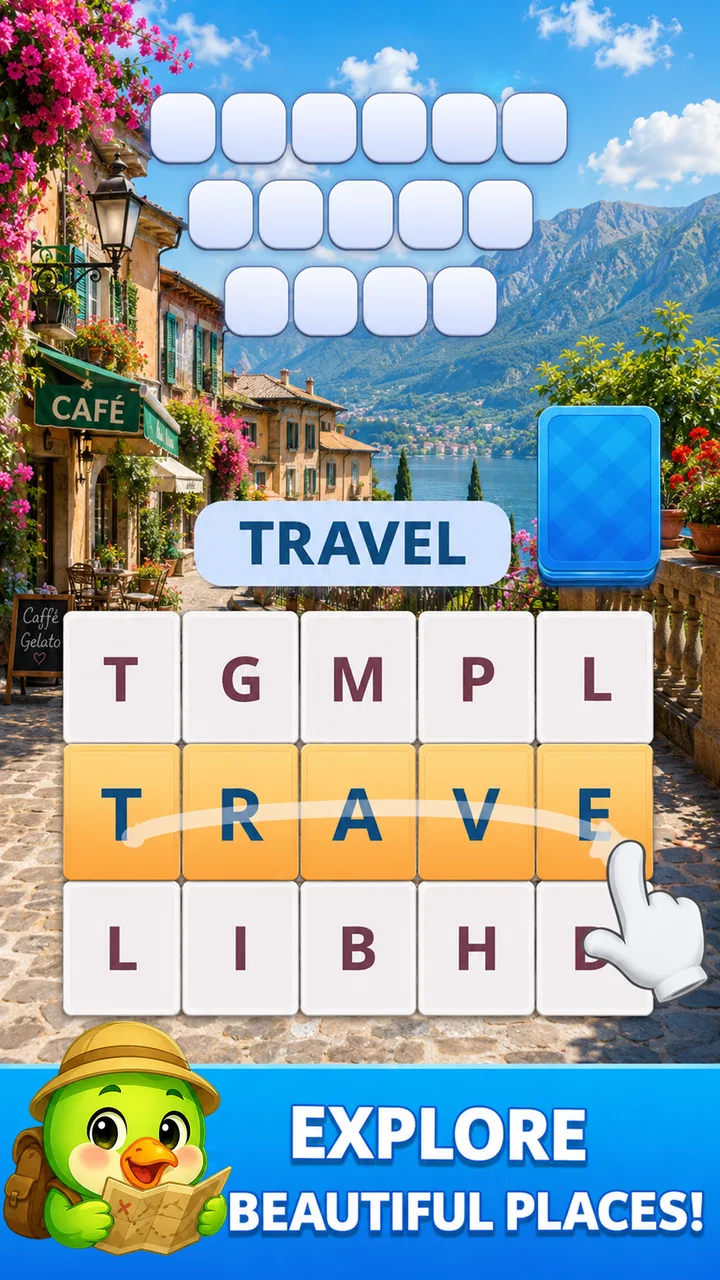
I approached Word Card: Word Connect as a small, low-pressure word game rather than a serious study tool, and that expectation made the experience easier to enjoy. It is built around connecting cards, finding words, and giving your attention something simple to work on for a few minutes. The result is a game that feels most comfortable during a short break, while waiting somewhere, or when I want a screen activity that is calmer than a fast action game.
What stood out to me first is how quickly the central idea becomes understandable. You are not dropped into a complicated story, a crowded multiplayer lobby, or a maze of systems. The focus stays on word puzzles and the pleasure of spotting a useful connection. That simplicity is also the main reason I would recommend it selectively: people who enjoy compact vocabulary challenges should feel at home, while players looking for deep strategy or a large progression system may find it too restrained.
What the first few minutes are really like
The game comes from Superaid Games and sits firmly in the word-game category. It is free to start, with optional in-app purchases ranging from $1.99 to $99.99 per item. I would treat that pricing range as a reason to play at your own pace rather than as a reason to spend early. The basic appeal is the puzzle itself, so a new player can first decide whether the card-and-word format is enjoyable before considering any purchase.
You May Also Like

 Pandora - Music & Podcasts
Pandora’s Music Is Easy to Start, but Harder to Recover
Pandora’s strength is its low-effort path from a seed to a station. Its weak spot is how much confidence it asks you to place in connection, setup, and quiet recovery.

 AccuWeather: Weather Radar
AccuWeather Review: A Quick, Clear Forecast for Everyday Decisions
For everyday plans, the best forecast is the one you can understand quickly. AccuWeather makes rain timing, radar, and local conditions easy to act on, with a few trade-offs.

 Hill Climb Racing
Why Hill Climb Racing Still Turns Crashes Into One More Run
A tiny car, a bumpy hill and one more upgrade: Hill Climb Racing keeps resurfacing because its simple chaos makes every near-miss feel personal.

 AliExpress - Shopping App
AliExpress Makes Global Shopping Feel Personal, but Shoppers Bear the Risk
AliExpress turns a global marketplace into a pocket-sized discovery engine. Its reach is useful, its shopping loop compelling, and its trade-offs easy to miss.

 Lords Mobile: Kingdom Wars
Lords Mobile Is a Kingdom-Building Routine, Not a Quick Match
A case-by-case verdict on the building, battles, device demands, and social commitments that make Lords Mobile rewarding for some players and exhausting for others.

 PDF Scanner app - TapScanner
TapScanner Makes Paperwork Easier to Capture, Check, and Share
TapScanner makes scanning with a phone feel less like a rescue operation and more like a dependable step in getting work done. Its capture tools are useful, though not flawless.
More From Our News Desk
View All News


The audience setting is Everyone, which matches the approachable nature of the activity. I would be comfortable suggesting it to a family member who wants a gentle vocabulary game, although younger players may still benefit from an adult explaining unfamiliar words or helping them understand the interaction. The game is available for devices running Android 7.0 or later, and the current version is 2.0.1.
Its public reception is notably positive, with a 4.9 average from around 428 ratings and more than 65 written reviews. It has also passed 10 thousand installs. Those figures suggest that the concept has found a receptive audience, but they do not replace personal testing. A high rating cannot tell you whether the pace, word difficulty, or card presentation suits your habits, so I would still give the opening puzzles a fair trial before forming an opinion.
Starting without overthinking the interface
My advice for a first session is simple: do not try to optimize anything immediately. Open the game, look at the available cards, and identify the most obvious word you can make. The first useful success is not about speed. It is about understanding the relationship between the cards and the answer, then repeating that action once or twice until the interaction feels natural.
This matters because word games often create unnecessary hesitation by presenting a familiar idea in an unfamiliar control scheme. Here, the best way to reduce that friction is to experiment gently. If a card appears selectable, try building a short word before searching for an impressive one. A modest answer can teach you more about the puzzle flow than staring at the screen and waiting for a perfect solution.
I also found that reading the available letters or cards as a group works better than focusing on them one at a time. When I looked for patterns across the whole arrangement, I noticed possible words more readily. This is a useful habit for anyone who feels slow at word puzzles: scan for common beginnings and endings, then test the shorter combinations first. It turns the opening minutes into a manageable visual exercise rather than a test of vocabulary memory.
The first meaningful success is about learning the rhythm
The satisfying moment is not simply completing a word. It is recognizing the rhythm of the game: inspect the cards, form a possibility, confirm it, and then reassess what remains. Once that loop makes sense, the experience becomes more relaxing. I would describe this as the point where a first-time player stops asking, “What am I supposed to do?” and starts asking, “What can I find next?”
One practical tip is to avoid committing emotionally to your first guess. If a word does not work, that does not necessarily mean the puzzle is unfair or that you are missing an obscure definition. It may simply mean the intended arrangement follows another pattern. I found it more productive to treat an unsuccessful attempt as information about the puzzle rather than as a failure.
Another useful approach is to separate recognition from recall. First, look for word shapes that seem visually possible. Only after that should you search your memory for less obvious vocabulary. This two-stage method keeps the game accessible and helps prevent the common mistake of assuming every solution must be a long or unusual word.
Where new players may become confused
The card theme can make the game feel slightly different from a conventional word grid. Someone expecting a crossword layout or a familiar letter wheel may initially wonder how much freedom they have when selecting cards. I would not rush past that uncertainty. Spend a moment testing the interaction, because understanding what counts as a valid connection is more valuable than guessing randomly.
It is also easy to assume that a puzzle should be solved in one brilliant leap. In practice, I found the calmer approach more useful: try a reasonable word, observe what changes, and use the remaining cards to guide the next thought. That makes the game feel less like a single-answer riddle and more like a sequence of small discoveries.
Vocabulary can create another kind of confusion. If a word seems unfamiliar, the problem may be your own word knowledge rather than the game’s basic structure. I recommend keeping a mental note of words that appear new to you instead of immediately dismissing the puzzle. That turns a difficult round into a small learning opportunity, although the game itself should not be treated as a replacement for a dictionary or a structured language course.
There is a trade-off here. A player who already enjoys wordplay may appreciate the pause between guesses, while someone who wants constant confirmation and rapid rewards may find the experience slower than expected. The game’s gentle format is a strength for relaxation, but it can feel limited if your preferred word games provide elaborate hints, competitive leaderboards, or extensive social features.
How I would fit it into an ordinary day
Imagine having ten quiet minutes before an appointment. I would open the game, complete a few puzzles, and stop when my attention shifted elsewhere. That use case suits it well because the activity does not demand a long uninterrupted session from me. It gives the break a little structure without requiring the commitment of a full campaign or a competitive match.
It can also work as a wind-down activity, especially for people who prefer something mentally active but not visually frantic. I would keep the session short if I were already tired, since searching for words can become irritating when concentration is low. The game is relaxing when I choose to play patiently; it is less relaxing when I turn every puzzle into a speed challenge.
For families, I can see a simple shared use: one person suggests possible words while another handles the cards. That makes the puzzles conversational without requiring a formal multiplayer mode. The limitation is that the experience remains centered on the individual puzzle, so people looking for robust cooperative play should choose a game designed specifically around shared turns.
What makes it different from familiar alternatives
Compared with a crossword, this game feels more immediate. A crossword usually asks me to work from clues, crossing letters, and a larger grid. Word Card: Word Connect places more emphasis on noticing relationships among the cards and finding words directly. That makes it easier to begin casually, but it may offer less of the layered deduction that crossword fans enjoy.
Compared with a traditional word-search game, the appeal is less about scanning a dense field for hidden terms. The card presentation gives the task a more focused shape. I found that helpful when I wanted a cleaner mental challenge, although players who love large visual searches may prefer the busier format of a word-search board.
It also differs from a language-learning app. I would not install it expecting lessons, pronunciation practice, grammar explanations, or a planned curriculum. Its value is closer to mental exercise and vocabulary discovery through play. That distinction is important: it can support an interest in words, but it does not replace deliberate study.
Against a fast arcade game, the contrast is even clearer. There is no need for reflexes or rapid movement to appreciate the core activity. That makes it a better choice for a quiet break, but a weaker choice for someone who wants adrenaline, competition, or constant visual change. The right comparison depends on whether you want to think calmly or react quickly.
Small strategies that improve the experience
My first concrete strategy is to begin with the shortest plausible word. Short answers can reveal how the card connections behave and may make the remaining arrangement easier to read. Even when that word is not the final answer you want, the attempt can help you stop treating the puzzle as an intimidating block of letters.
My second strategy is to change your viewing angle mentally. Instead of reading only from left to right, look for familiar endings, repeated sounds, and clusters that could belong together. This is especially useful when the obvious first idea fails. The goal is not to force an answer but to make your search more systematic.
My third strategy is to use a pause as part of the solution process. If I stare at the same arrangement for too long, every option begins to look wrong. Closing my eyes for a moment or switching attention to another card often makes a previously overlooked pattern easier to notice. That is a small habit, but it prevents frustration and keeps the game’s relaxed character intact.
I would also avoid spending money until I understand what the free experience offers me personally. Since optional items can cost as much as $99.99, the sensible approach is to regard purchases as a later decision, not part of the installation ritual. If the game becomes a regular source of enjoyment, I can then decide whether an optional purchase feels worthwhile; if not, I have lost nothing by simply playing without one.
Who should try it, and who should skip it
I think it is a good fit for casual players who like word puzzles but do not want a demanding daily routine. It suits people who enjoy finding patterns, prefer a calm pace, and appreciate games that can be picked up for a short session. It may also appeal to someone who wants a screen activity that feels more thoughtful than scrolling but less intense than a strategy or action title.
I would be more cautious about recommending it to advanced crossword players seeking complex clues, to competitive players who need rankings and head-to-head pressure, or to language students looking for measurable lessons. Those users may be happier with a specialized alternative. The game’s strength is its focused card-and-word loop, and that same focus means it does not try to cover every kind of word-play experience.
Players who become frustrated by unfamiliar vocabulary should approach it with patience. The best mindset is curiosity rather than perfectionism. If every uncertain word feels like a personal defeat, the relaxing side of the game disappears. On the other hand, if you enjoy gradually recognizing patterns and adding a few words to your mental library, the challenge is easier to appreciate.
My recommendation after settling into the game
After spending time with it, I see Word Card: Word Connect as a compact word game with a clear purpose. It does not need a complicated presentation to be useful during a quiet moment. The card-based format gives ordinary word finding a slightly different texture, and the simple loop makes it approachable for a first-time player.
The most reassuring part for a newcomer is that success does not depend on mastering a large system before playing. Start with a short word, observe how the cards respond, and let each solved puzzle teach you how to read the next one. If you become stuck, reset your attention rather than immediately assuming the answer requires an obscure trick.
My final view is positive, with a clear qualification: this is best as a calm, casual word-puzzle companion, not as a complete vocabulary course or a competitive word arena. I would install it for short breaks, recommend it to friends who enjoy gentle mental challenges, and keep my spending decision separate from the initial trial. If that sounds like the kind of play you want, Superaid Games has made a focused option worth exploring.
For me, the strongest reason to keep it available is its low barrier to entry. I can open it, make a few thoughtful attempts, and leave without feeling that I abandoned a complicated mission. That makes it a practical choice for scattered free time, provided I am comfortable with its focused format and optional purchase structure. Word Card: Word Connect earns my recommendation for patient word-game fans who value simple discovery over noise and pressure.
FAQs for Word Card: Word Connect
01What is Word Card: Word Connect?
Word Card: Word Connect is a casual word puzzle game built around forming words from a set of available letters. As you progress, the puzzles generally become more challenging and may include bonus words, themed stages, or additional objectives. It is designed for short play sessions, making it suitable for relaxing at home, during a commute, or whenever you want a simple mental challenge.
02How do you play Word Card: Word Connect?
Each level presents a group of letters that you combine to create valid words and complete the puzzle. You usually swipe or tap across letters rather than typing the answers manually. Finding the required words advances the level, while discovering extra words can provide additional rewards. The straightforward controls make the game easy to learn, although later stages may require stronger vocabulary and more careful thinking.
03Can Word Card: Word Connect be played offline?
Many word puzzle levels can typically be played without a constant internet connection, which is convenient when traveling or using mobile data sparingly. However, some features may still require internet access, including advertisements, cloud synchronization, leaderboards, rewards, or in-app purchases. Before relying on offline play, it is worth testing the game after temporarily disabling your connection because availability can vary by version and device.
04Does Word Card: Word Connect contain advertisements or in-app purchases?
Word Card: Word Connect may use advertising as part of its free-to-download model, with ads potentially appearing between levels or when you choose to receive optional bonuses. Depending on the version, the game may also offer in-app purchases for removing ads, obtaining hints, or receiving other virtual benefits. Check the store listing and purchase settings before downloading, especially if children may use the device.
05Is Word Card: Word Connect suitable for children and beginners?
The game is generally approachable for beginners because its core mechanic is simple: connect letters and find words. It can also encourage spelling, vocabulary practice, and pattern recognition, although it should be viewed as entertainment rather than a complete educational tool. Parents should review the game’s advertising, privacy information, and purchase options, since the suitability of those elements may depend on the child’s age and supervision.
Pros
- Simple swipe controls make word building easy to learn.
- Short levels work well for quick breaks or casual play.
- Progressive difficulty keeps later puzzles more challenging.
- Offline play is useful when you have no internet connection.
- Hints can help players continue without being completely stuck.
Cons
- Some puzzles may accept only specific word combinations.
- Repeated level patterns can make the experience feel predictable.
- Hints and extra assistance may be limited without watching ads.
- The game offers less depth for players seeking competitive modes.
- Ad interruptions can reduce the pace between completed levels.

Word Card: Word Connect
Gallery